
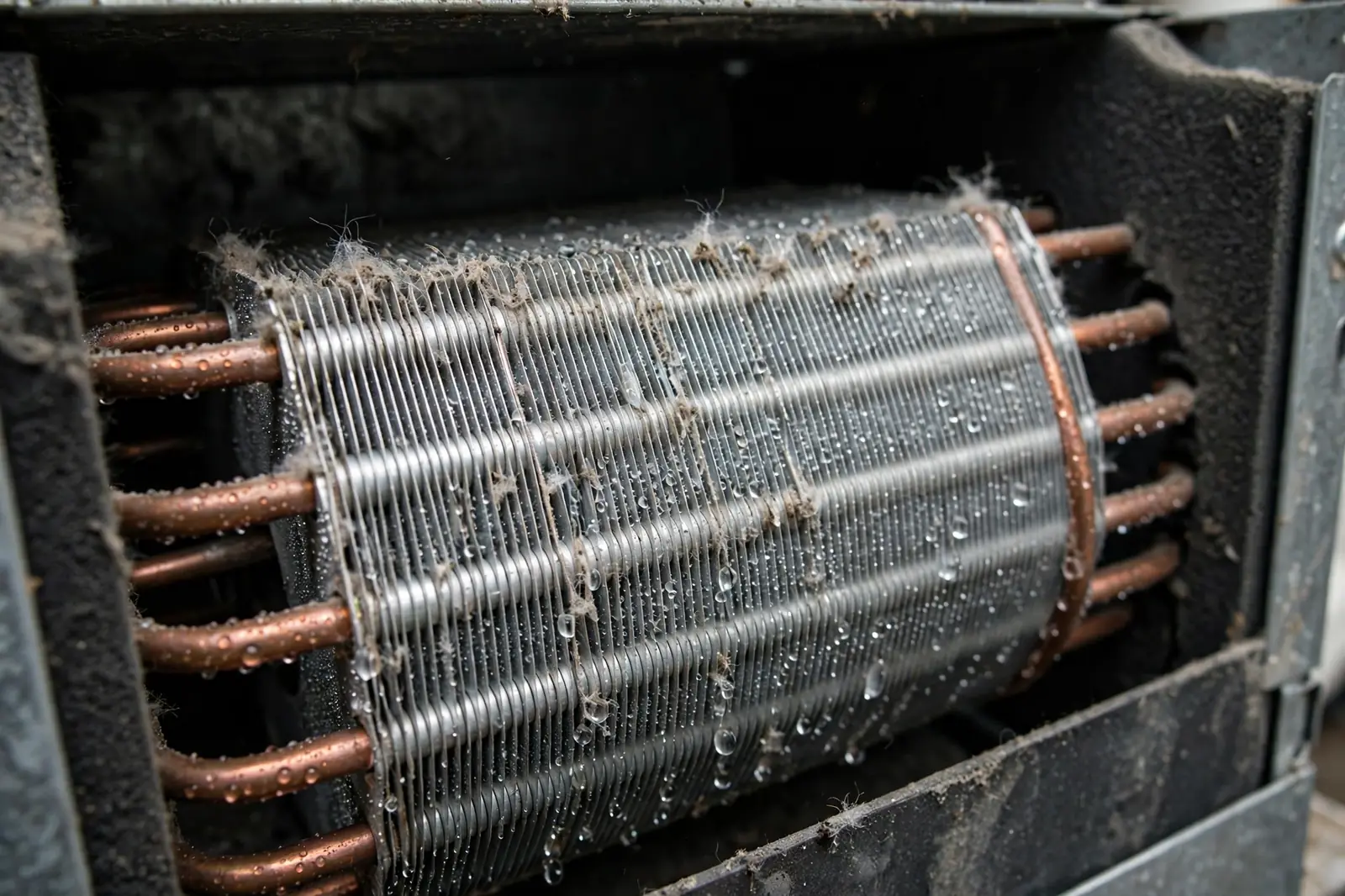
A musty smell from the AC usually comes from moisture sitting where air passes over it. In Fort Lauderdale, the AC runs most of the year, so the coil and drain pan rarely dry out. Mold and bacteria grow on those wet surfaces, and the blower pushes the smell into every room. Finding which part stays wet is the whole fix.
Here is a scenario, not a real client story, but it repeats across Fort Lauderdale every summer. A homeowner in the Victoria Park neighborhood of Fort Lauderdale notices the smell each time the AC kicks on after a quiet night. She changes the filter twice and sprays the vents with a scented cleaner. The smell fades for a day, then returns with the next cooling cycle. The source was never the filter. A slime layer in the drain pan was feeding the odor the whole time.
Mold in your home or business?
Talk to a remediation specialist now — fast response across Fort Lauderdale.
Where Does the Musty AC Smell Actually Come From?
The evaporator coil is the coldest and wettest part of the system. Air cools as it crosses the coil, and water condenses on the fins. Dust sticks to that wet surface and feeds mold and bacteria between cleanings. Technicians call the sour result dirty sock syndrome, named for the smell.
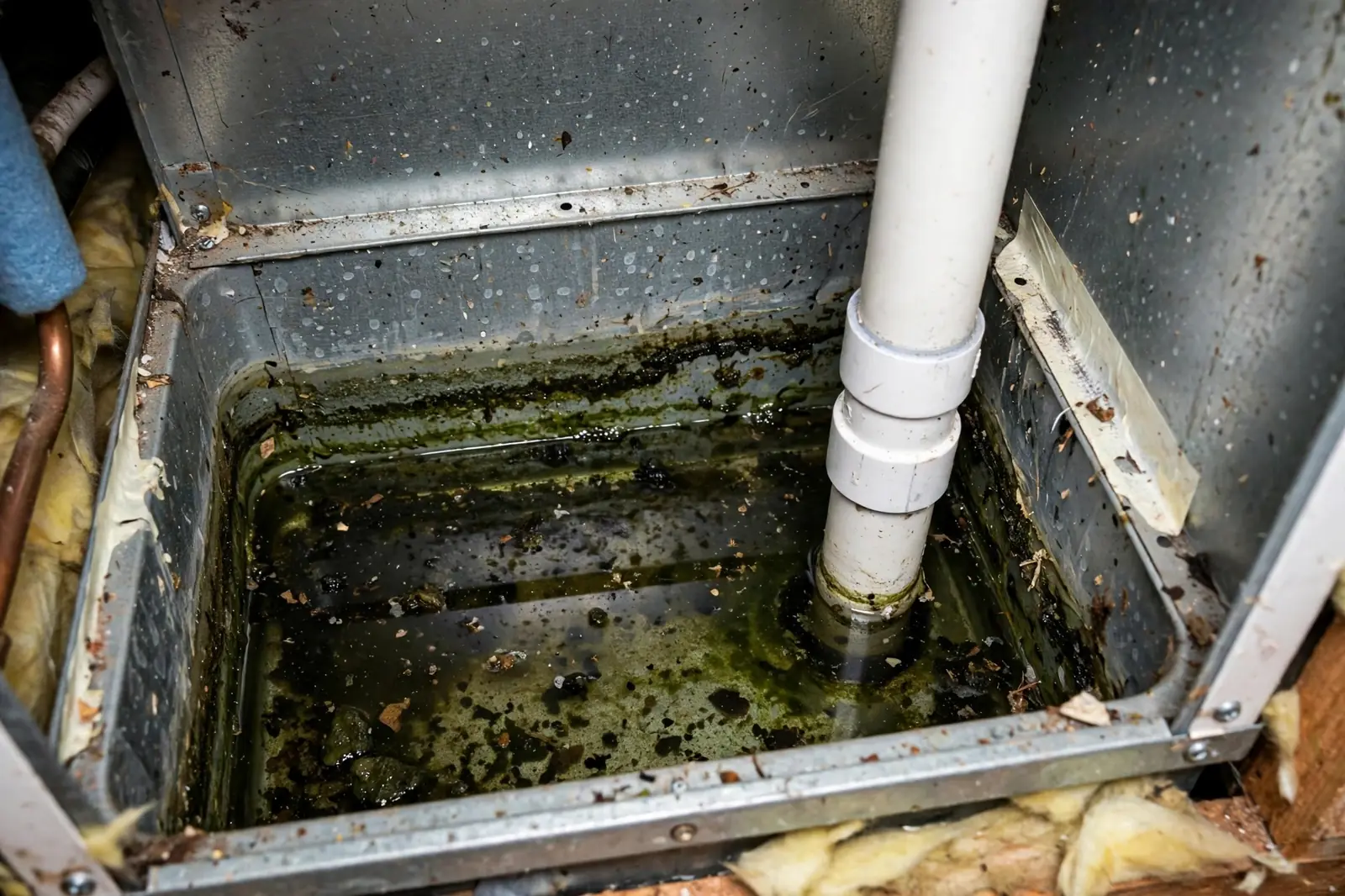
Below the coil, the drain pan catches condensate and sends it outside through a drain line. Algae and slime grow inside that line during warm months. When the line clogs, water backs up into the pan and sits there. A pan of standing water keeps the whole air handler damp between cycles.
A soaked or overdue filter adds its own odor to the airstream. It also slows the airflow that helps dry the coil after each cycle. Growth inside ductwork is less common, but it spreads odor evenly to every vent. Even odor in every room, with a clean coil, points toward ducts or the drain pan.
What Should You Check First When the AC Smells Musty?
Start with the pattern, because the pattern names the source. Then work through six checks before you pay for any cleaning.
- Sniff the vent, then the room. A smell strong at the vent and weak elsewhere starts inside the system.
- Check the filter. A grey, damp, or bowed filter is overdue and can hold odor on its own.
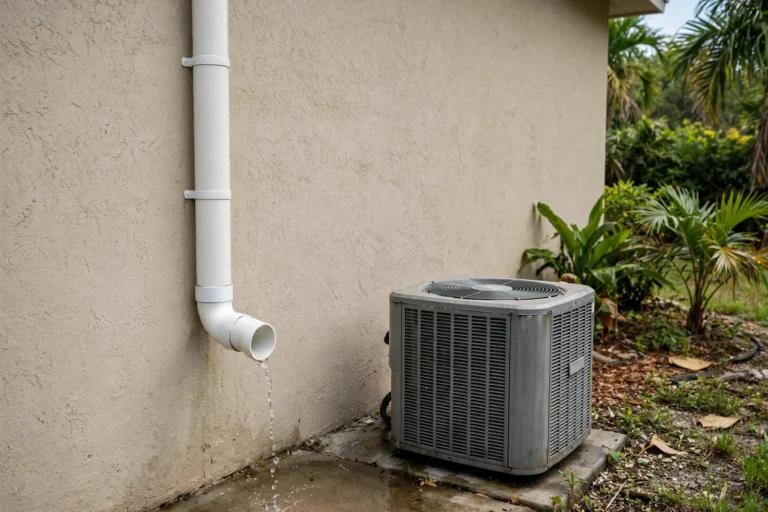
- Find the drain line outlet outside. It should drip steadily while the AC runs, and a dry outlet suggests a clog.
- Look in the drain pan if you can reach it safely. Standing water or slime means the line needs clearing.
- Read the room humidity with a hygrometer. Air above 60 percent keeps the system damp and feeds the smell between cycles.
- Shine a flashlight at the coil through the access panel, with the power off. Dark spotting on the fins means growth is established.
How Do You Fix a Musty AC Smell?
Three fixes handle most cases at home. Change the filter first, since a loaded filter feeds odor and strains airflow. Flush the drain line with a cup of vinegar at the access tee, then check the outside drip. Set the fan to auto so the coil drains between cycles instead of re-wetting the air.
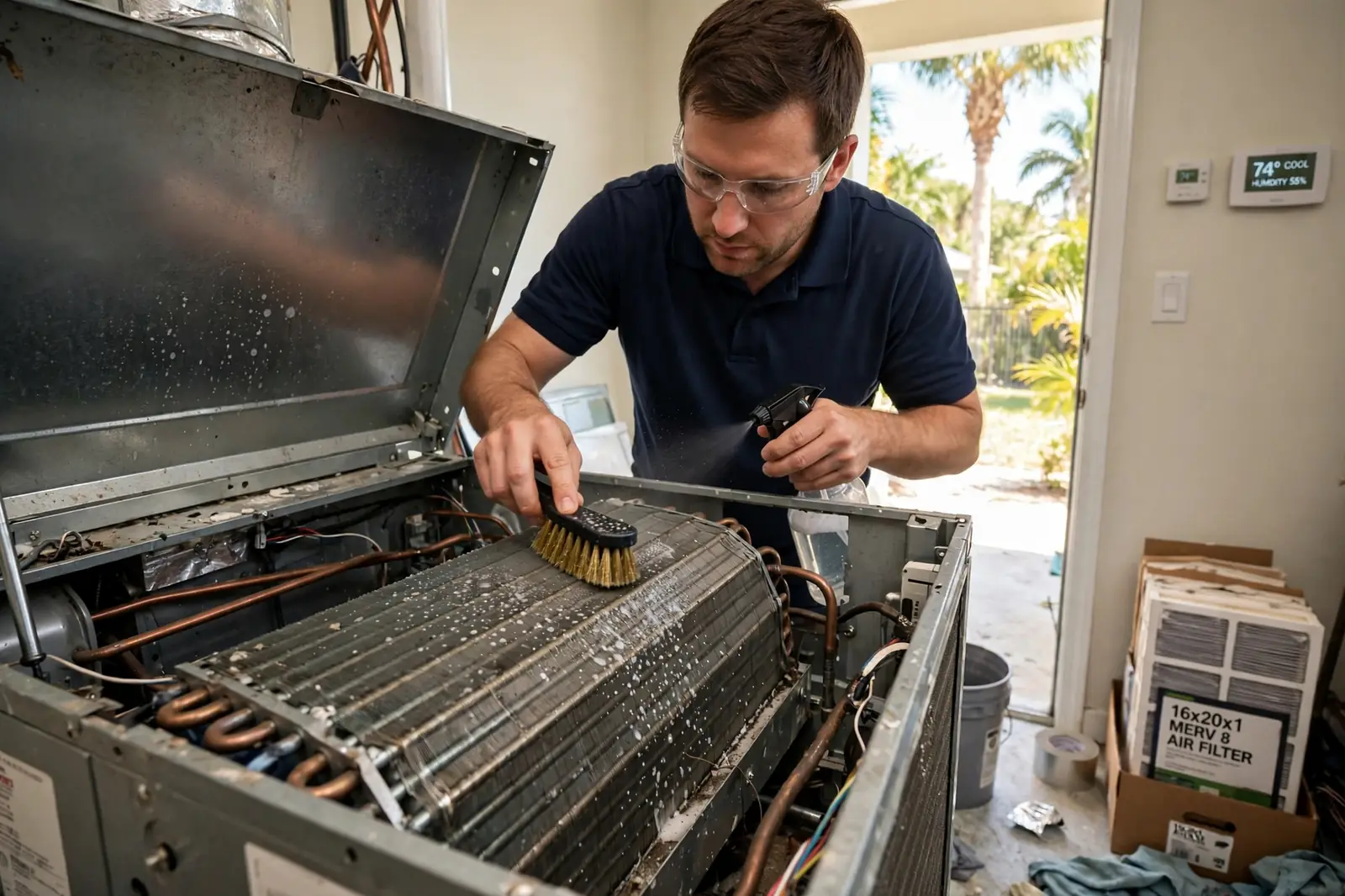
Deeper growth needs a technician with the panel open. A coil cleaning strips the biofilm that home rinsing cannot reach. The pan gets scrubbed and treated so slime does not return within weeks. Cleaning the coil without clearing the drain buys two clean weeks, not a fix.
Is It Mold, or Just a Dirty AC?
A musty smell alone does not prove mold lives in your system. Dust, bacteria, and a wet filter can produce the same sour note. Scented sprays and vent fresheners only mask the odor for a few hours. The smell is a moisture report, and moisture is the thing worth fixing.
When Should You Call a Professional?
Call when the smell returns within days of a filter change and line flush. Call when you see dark growth past the filter slot or on the coil. Water stains on the ceiling below an attic air handler also count. So does any household member whose asthma worsens when the AC runs.
A professional visit maps where moisture sits inside the system. The coil, pan, and nearby ductwork get checked in one pass. If growth has spread past the unit, the work follows the containment steps on our mold remediation process page.
Mold in your home or business?
Talk to a remediation specialist now — fast response across Fort Lauderdale.
Get the Musty Smell Checked at the Source
A musty AC smell means moisture is winning somewhere inside the system. To get started, request a mold inspection or call (855) 732-0108. Tell the person who answers when the smell runs strongest and which rooms carry it. Mold Remediation Ft Lauderdale serves Fort Lauderdale and Broward County.
Mold Remediation Ft Lauderdale
(855) 732-0108
Frequently Asked Questions
Why does my AC smell musty when it first turns on?
The smell builds while the system sits idle, with moisture resting on the coil. The first cycle pushes that collected odor through the vents at full strength. Minutes later it seems weaker because your nose adjusts, not because it cleared. A coil and drain pan cleaning removes the source instead.
Is a musty smell from the AC a health risk?
For most people, the smell signals irritation more than illness. Mold spores and bacteria on a wet coil can aggravate allergies and asthma. Sensitive people usually notice it first and most. The lasting fix is removing the moisture feeding the growth.
Can a clogged AC drain line cause a musty smell?
Yes, and it is one of the most common causes. A clogged line traps water in the drain pan beneath the coil. That standing water grows slime and bacteria within days during warm weather. The blower then pulls air across the pan and carries the odor indoors.
How do I get the musty smell out of my AC?
Replace the filter, clear the drain line, and clean the coil and pan. Those steps remove the surfaces the smell grows on. If odor returns within a week, growth likely sits deeper in the system. Ductwork and wet insulation are the usual next locations at that stage.
Does the fan setting dry the coil after cooling?
A short fan run after cooling can dry the coil surface. In humid weather, the fan can also push pan moisture back into the air. Most Fort Lauderdale homes do better with the fan set to auto. That setting lets the system drain fully between cycles.
How often should an AC be cleaned in Fort Lauderdale?
Once a year is the standard rhythm, ahead of the summer peak. Homes near the water may need the drain line checked twice a year. The filter needs a monthly look during heavy summer use. Small checks between services catch most smell problems early.

One Comment