Vacant home mold prevention in Fort Lauderdale comes down to controlling indoor humidity while nobody is home. Keep the air conditioning running, and shut off water sources you do not need. For humidity targets, see our ideal indoor humidity page. For drying timelines, see our after water damage guide. An empty house has nobody to notice a leak.
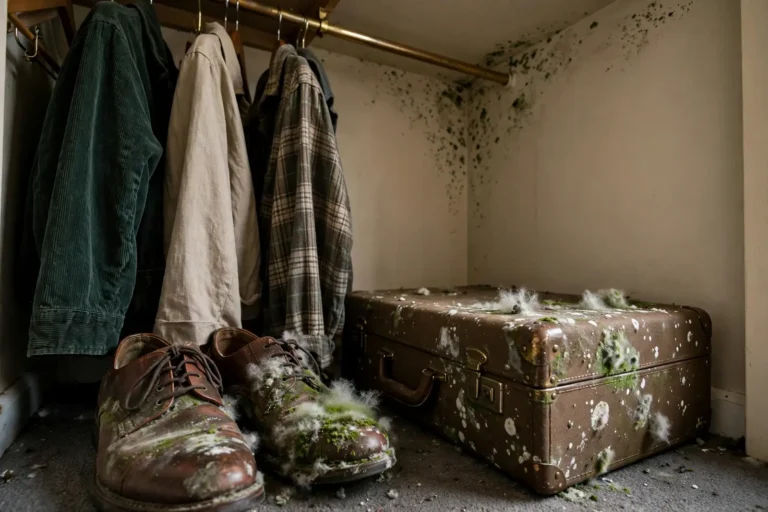
Late October. You unlock the door of your Fort Lauderdale condo after five months up north. The smell reaches you before the lights come on. That flat, musty odor is the first sign that humidity got ahead of you. Here is a scenario, not a real client story, but it repeats every fall across South Florida. An owner sets the thermostat to save money, closes every interior door, and flies out. The AC cycles less often, and moisture settles into closets and bathrooms. By November, the walls tell the story.
This guide walks you through both ends of that trip. You get a pre-departure checklist, a return inspection, and the insurance question owners ask too late. Some advice here will contradict what your neighbors told you, and the reasons are spelled out.
Mold in your home or business?
Talk to a remediation specialist now — fast response across Fort Lauderdale.
Why Do Empty Homes in Fort Lauderdale Grow Mold So Easily?
Empty homes grow mold because Fort Lauderdale’s air carries far more moisture than an unattended house can shed. For outdoor humidity detail, see our process page. Mold needs only moisture, a food source such as drywall paper or dust, and time. An occupied home removes humidity through daily AC use, open doors, and fast leak detection. A vacant one loses all three.
For outdoor humidity detail, see our process page. Those swings matter because a closed house holds the night’s moisture inside.
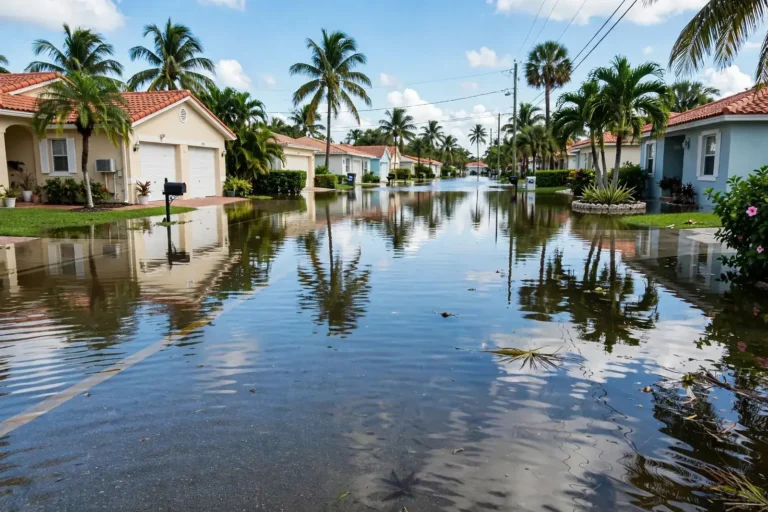
Hurricane season adds another layer. As of late September 2026, the season runs through November 30. During a storm, a roof vent leak can soak insulation for weeks in a house nobody visits. One restoration company serving Palm Beach and Broward counties reports a surge in calls from returning seasonal owners every November.
What Humidity Level Should I Hold in a Vacant Home?
Hold indoor relative humidity below 60 percent while the home sits empty. In practice, set your humidistat or dehumidifier near 58 percent, because some sensors read up to 10 points off. The full target ranges, and how to measure them accurately, are covered in our ideal indoor humidity page.
Here is the contrarian part. A thermostat setting is not a humidity setting. Florida Power and Light suggests 80 degrees for a non-programmable thermostat, but only alongside humidity kept below 60 percent. At higher setpoints the AC runs less, so it dehumidifies less. Treat the thermostat as a starting point and the hygrometer reading as the real goal.
A hygrometer only reads the room it sits in. Place one in the most closed-off room, usually a windowless bathroom or interior closet. That reading tells you more than one taken in the living room.
What Belongs on a Vacant Home Mold Prevention Checklist in Fort Lauderdale?
A good pre-departure checklist covers the AC, water shutoff, drains, humidity monitoring, and a person who can check in. Work through it two weeks before you leave so you have time to fix what you find. Each item below targets a specific way that moisture gets into an empty house.
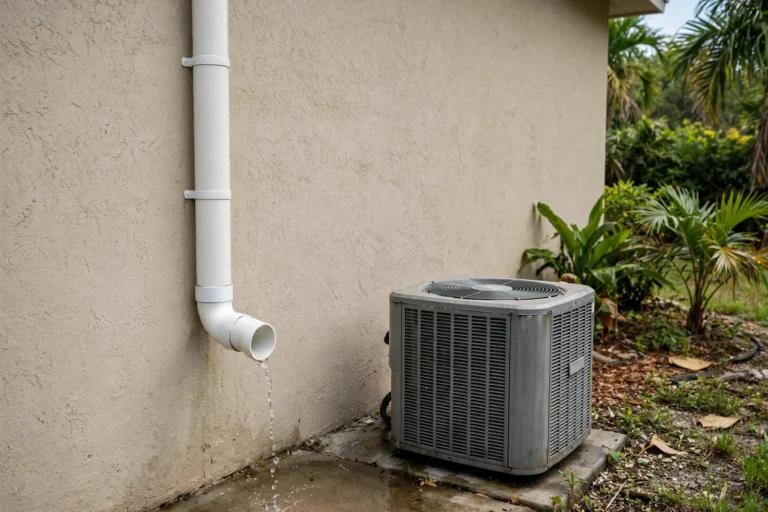
Service the air conditioning. Replace the filter, because a clogged filter reduces the system’s ability to remove moisture. Flush the condensate drain line, since algae and sludge build up fast in Florida lines. A backed-up line can shut the system down or overflow into the ceiling. Ask your technician about a float switch that cuts power if the pan fills.
Shut off the water. Close the main valve unless a fire sprinkler or irrigation system needs it. FPL also recommends switching off the water heater at the breaker. A burst supply line in an empty house can run for weeks. Some homes fit a smart shutoff valve, such as Moen Flo or Phyn. These close automatically when they detect unusual flow. Check current specifications before buying.
Add dehumidification. FPL suggests one dehumidifier per 1,000 square feet, set near 58 percent and placed near sinks and showers. Run the drain to a floor drain or sink so the tank never fills. A full tank shuts the unit off, and then you have no dehumidifier at all.
Deal with the drains and the fridge. Cover sink and tub drains, or add a little water to the traps. Dry traps let sewer gas into the house. Run the refrigerator on its warmest setting with the ice maker off. Or empty it, clean it, and prop the doors open.
Open the interior doors. Closed doors trap humid air in bathrooms, closets, and bedrooms. Leave them open so conditioned air reaches every room. Some owners prefer closed doors for security, and that is a fair tradeoff, but the moisture risk is real.
Remove what mold loves. Take out cardboard boxes, food, and damp towels. Cardboard and paper feed mold quickly and hide it well.
How Can I Monitor a Seasonal Home From Far Away?
Remote monitoring works when you pair a humidity sensor with a local person who can walk through the house. Smart thermostats such as ecobee and Nest report indoor temperature, and many models also report humidity. Standalone Wi-Fi sensors, including SensorPush and Govee, log humidity and send alerts. Check each model’s specifications first, since features vary by generation. For humidity targets and measuring, see our ideal indoor humidity page.
Sensors have limits. They cannot smell a musty closet or spot a ceiling stain. They also fail when Wi-Fi drops after a power outage, which happens in storm season.
Pair the sensors with a property manager or home watch service that checks the house every one to two weeks. FPL’s Energy Manager tool adds another signal. A sudden change in electric usage can point to an AC failure, and that is worth a phone call.
The most common miss on an empty house is not the visible spot on the wall. It is the slow moisture source behind it that nobody is around to catch.
Does Home Insurance Cover Mold in a Vacant Home?
Coverage for mold and water damage in a vacant home is often limited. The outcome depends on your specific policy. Many Florida homeowners policies restrict certain coverages after 30 to 60 consecutive days of vacancy. Water damage is one insurers commonly limit. Some newer policy language goes further and allows a denial if you did not report an occupancy change. This is general information, not insurance advice.
Insurers also separate “unoccupied” from “vacant.” An unoccupied home still holds furniture and belongings while the owner is away for the season. A vacant home is truly empty. The label affects how a claim is treated, so ask your carrier which category your seasonal home falls into.
Call your agent before you leave, not after you find damage. Ask about the vacancy threshold, inspection requirements, and whether a vacancy endorsement or separate dwelling policy makes sense. Keep dated photos and inspection logs, because they help if you ever file a claim.
How Do I Do a Seasonal Home Mold Check When I Return?
Do a seasonal home mold check before you unpack. Start outside the house, then move room by room, and let your nose and eyes lead. Stop and take photos if you find anything below.
Smell first. Walk in and pause. A musty or earthy odor that fades when you open a window may be mild. A smell that stays strong points to hidden growth.
Read the hygrometer. For humidity targets, see our ideal indoor humidity page. If humidity sits above 60 percent, run the AC and dehumidifier for a day, then read again. A number that will not drop suggests a moisture source.
Check the usual spots. Look at bathroom ceilings, window frames, closet corners, and the wall behind furniture pushed against an exterior wall. Look under sinks for stains, warped cabinet floors, or soft spots.
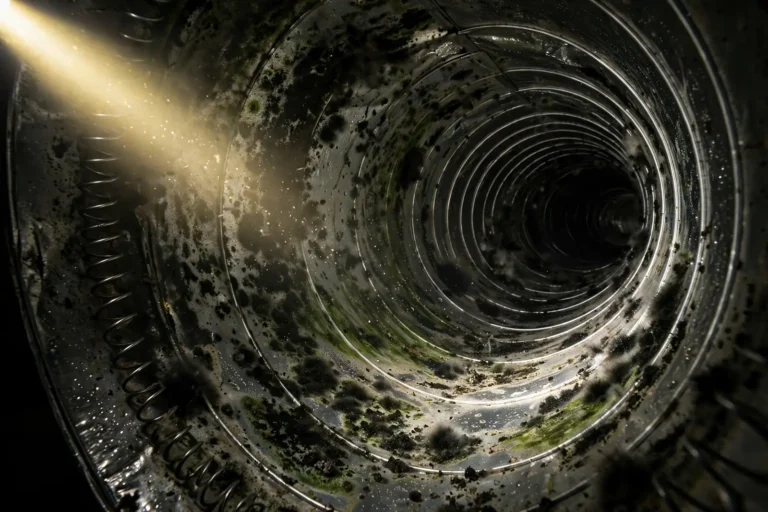
Inspect the AC. Check the air handler, the drain pan, and the vents for visible growth or standing water. HVAC condensation is one of the most common causes of mold in Fort Lauderdale homes.
Look up. Check the ceilings for brown rings and the attic for damp insulation, if you can reach it safely. Roof leaks from summer storms often show up here first.
Feel the flooring. Cupped hardwood or a damp carpet edge means water has been present for a while.
Can I Clean Mold Myself, or Do I Need a Professional?
You can clean a small patch of mold on a hard surface yourself. Larger or hidden growth calls for a professional. The EPA advises cleaning hard surfaces with detergent and water. It notes that areas larger than 10 square feet may need professional remediation. Wear gloves, goggles, and an N-95 respirator. Porous materials such as ceiling tile and carpet often have to be discarded.
The EPA does not recommend bleach or other biocides for routine mold cleanup. Bleach removes the stain, but it does not fix the moisture that feeds the growth. If the spot returns within weeks, water is still arriving somewhere. For which surfaces bleach works on, and what to use instead, see our after water damage guide.
Professional remediation follows a different process. For the remediation steps, see our process page. After a long vacancy, professional mold remediation in Fort Lauderdale starts with inspection and moisture mapping, not surface cleaning.
Some people report allergy or breathing symptoms around mold. If anyone in your household has asthma, use extra caution. Talk to a healthcare professional before cleaning it yourself.
Which Fort Lauderdale Homes Face Added Mold Risk When Empty?
Older AC systems, ground-floor units, and waterfront exposure can add risk. Any empty property can develop mold. Part-time residents in the Las Olas Isles neighborhood of Fort Lauderdale may close homes for months. Humidity gets time to build. Condo owners in the Flagler Village neighborhood of Fort Lauderdale face an extra layer. A leak from a neighboring unit can reach your walls unseen.
Condo and HOA owners should ask their association about water shutoff procedures and unit inspection policies before leaving. Property managers handling rentals between tenants face the same exposure. A written inspection log protects both owner and manager.
Mold in your home or business?
Talk to a remediation specialist now — fast response across Fort Lauderdale.
Frequently Asked Questions
How long can a house sit empty before mold grows?
For the growth timeline after water damage, see our after water damage guide. In humidity above 60 percent, growth can appear within days to weeks. A Fort Lauderdale house with AC off in summer sits well past that threshold. Owners who leave for a month or longer should plan for active humidity control.
Should I turn off the AC in a vacant house?
No. Turning the AC off lets indoor humidity match the outdoor air. That air is humid in Fort Lauderdale for most of the year. Keep it running at a moderate setpoint, and confirm with a hygrometer that humidity stays under 60 percent. A dehumidifier adds a second layer of protection.
Does a musty smell always mean I have mold?
Not always, but the smell deserves attention. A musty odor can come from damp materials, a dry drain trap, or growth in the AC system. If the smell persists after ventilating and drying, a mold inspection can find the source. A moisture meter and thermal imaging help locate damp areas behind walls.
Will insurance cover mold found after a long vacancy?
It depends on your policy. Many Florida policies limit water damage coverage after 30 to 60 consecutive days of vacancy, and terms vary by carrier. Read the vacancy clause and call your agent before you leave. Save dated inspection photos, since insurers often ask for documentation.
Where can I get an inspection or quote in Fort Lauderdale?
Call Mold Remediation Ft Lauderdale for an inspection or a project-specific quote. A technician measures moisture, checks the AC system and hidden areas, and explains what needs to be done. Pricing depends on what the inspection finds.
Ready to Have Your Home Checked?
Book an inspection with Mold Remediation Ft Lauderdale before you leave or after you return. Call (855) 732-0108. We serve Fort Lauderdale and Broward County homes, condos, and commercial properties. Tell us when you are leaving or returning, and we will schedule around your trip.
Mold in your home or business?
Talk to a remediation specialist now — fast response across Fort Lauderdale.