
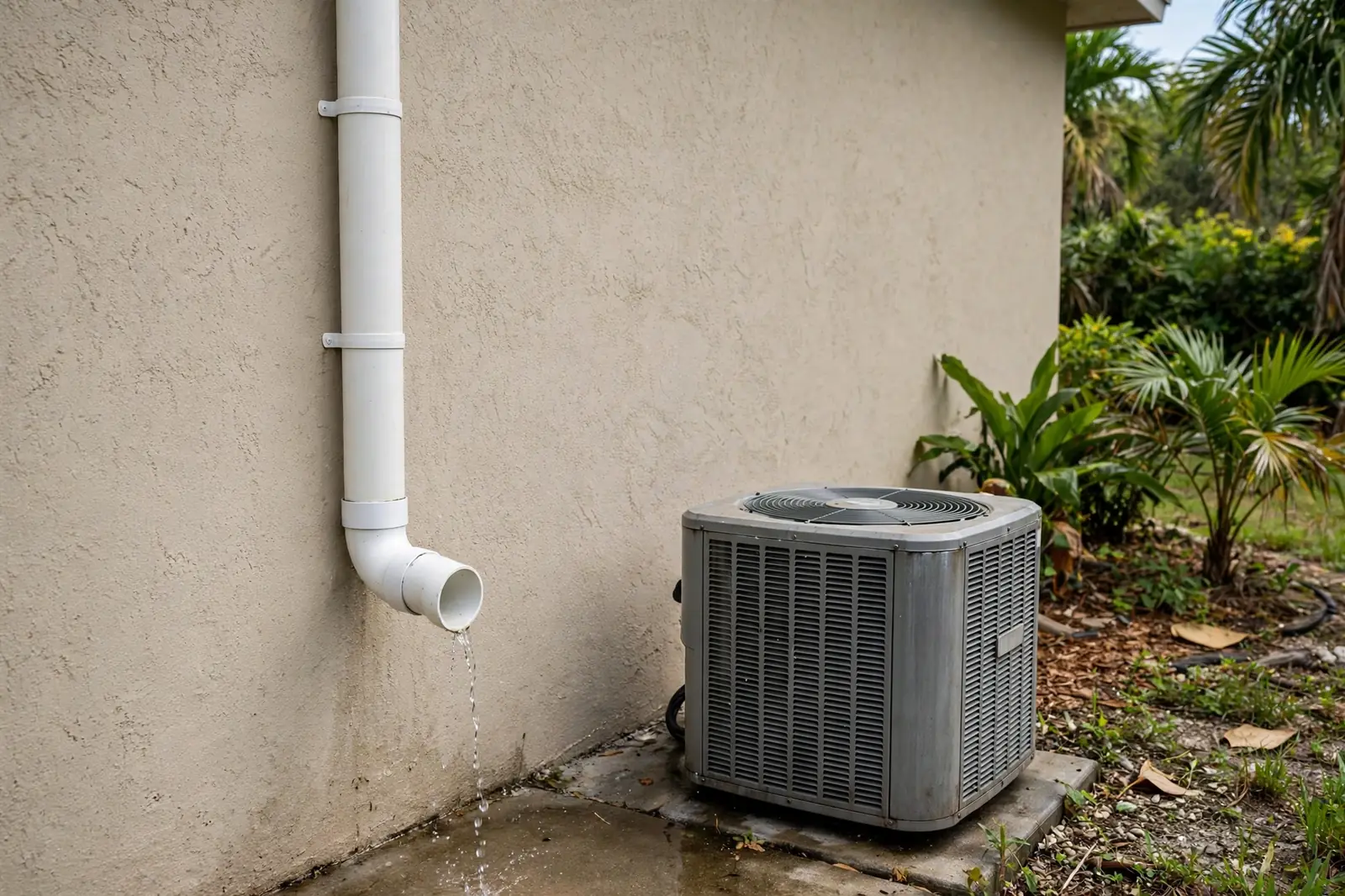
A clogged AC drain line traps condensate inside the air handler until it overflows. In Fort Lauderdale, algae and slime grow inside the line through the long cooling season. The trapped water feeds mold in the drain pan and can spill into ceilings and walls. Clearing the line and keeping it clear ends the cycle.
Here is a scenario, not a real client story, but AC techs see it every August here. A homeowner in the Edgewood neighborhood of Fort Lauderdale finds a water stain blooming on the living room ceiling. The AC still cools, so she blames the roof and calls a roofer first. The roofer finds dry shingles and points at the attic air handler instead. Its drain pan sits full, with the float switch never tripping.
Mold in your home or business?
Talk to a remediation specialist now — fast response across Fort Lauderdale.
How Does an AC Drain Line Get Clogged?
The line carries condensate from the indoor coil to outside the home. Warm, dark, and constantly damp, it suits algae perfectly. Slime builds on the pipe walls a little more each week. Dust and insulation fibers wash in and give the slime body.
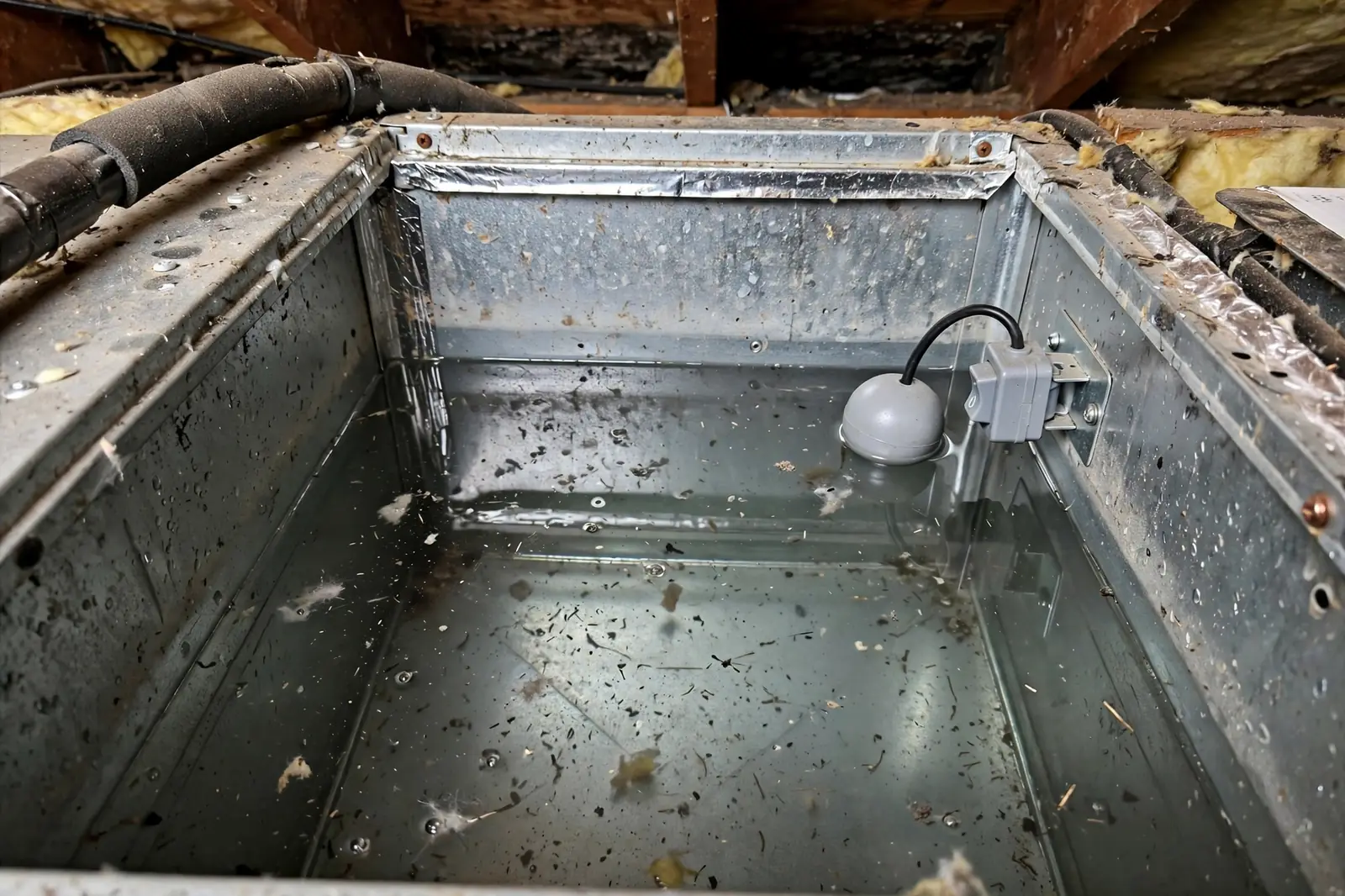
Growth narrows the pipe until water slows, then stops. The pan below the coil fills because the water has nowhere to go. Many systems have a float switch that kills the AC at that point. Older systems without the switch simply overflow into the home.
What Are the Signs of a Clogged AC Drain Line?
Most clogs announce themselves before the ceiling stain appears:
- AC stops cooling mid-cycle. A tripped float switch shuts the system down to prevent overflow.
- Water pools around the indoor unit. The pan or the floor near the air handler stays wet.
- A musty smell starts when the AC runs. Standing pan water grows the odor described on our musty smell from AC page.
- The outside drain outlet stops dripping. A running AC should drip steadily at the exterior outlet.
- Stains or bubbling paint appear on ceilings below the unit. Attic air handlers leak downward long before owners notice.
How Do You Clear a Clogged AC Drain Line?
Start at the outside outlet with a wet and dry vacuum. Seal the vacuum hose around the outlet and run it for several minutes. The suction pulls the slime plug out through the exterior end. Check afterward that water drips freely while the AC runs.
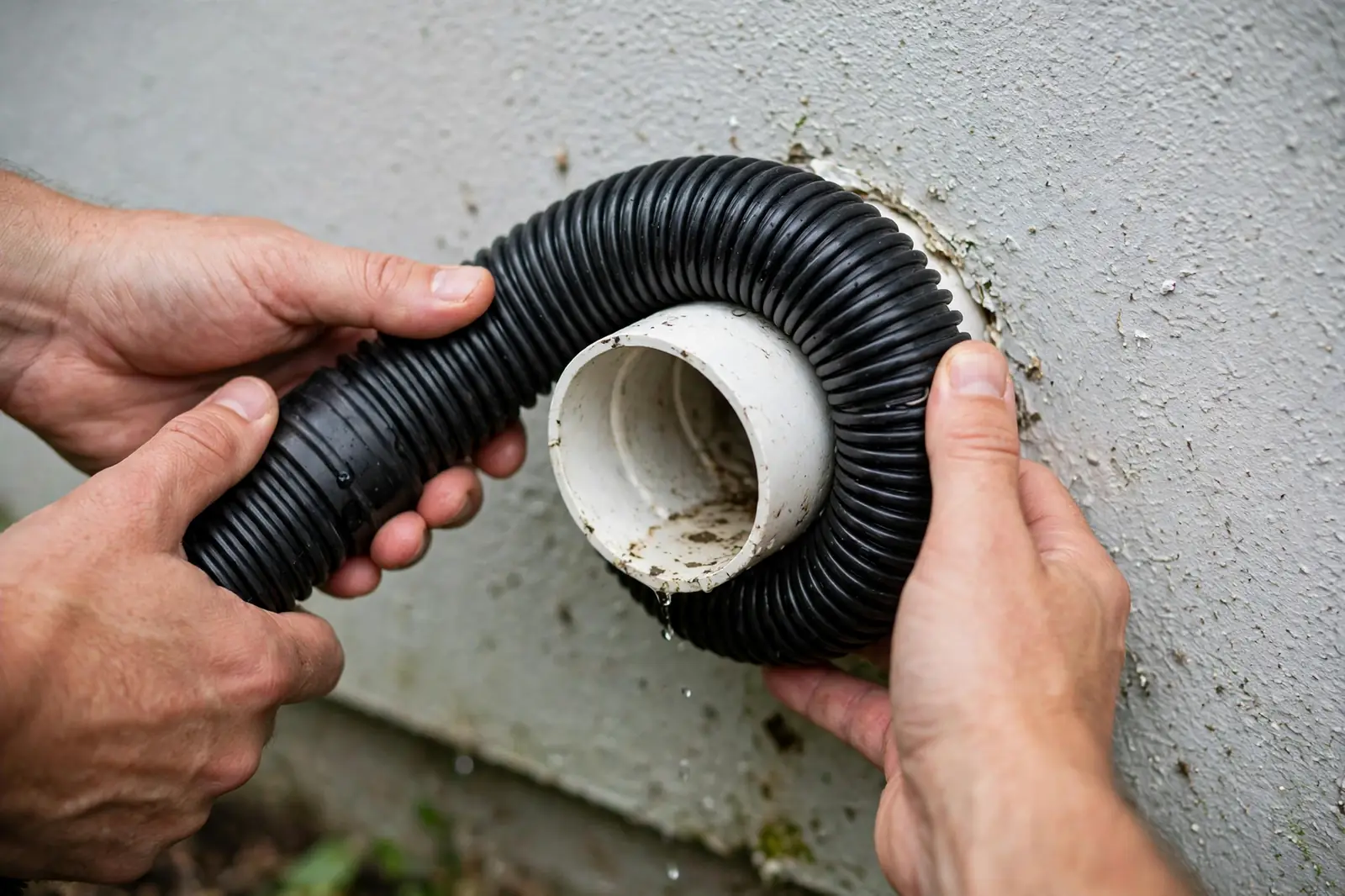
Vinegar keeps a cleared line open between deeper cleanings. Pour a cup into the access tee near the air handler monthly during summer. Skip bleach in the line, since it can damage metal pans and coils.
Clear the pan itself once the line runs free again. Scoop or vacuum out slime, then wipe the pan clean. A pan left dirty reseeds the line within weeks. Tablets made for drain pans slow regrowth between visits.
When Is a Clog an HVAC Problem, and When Is It a Mold Problem?
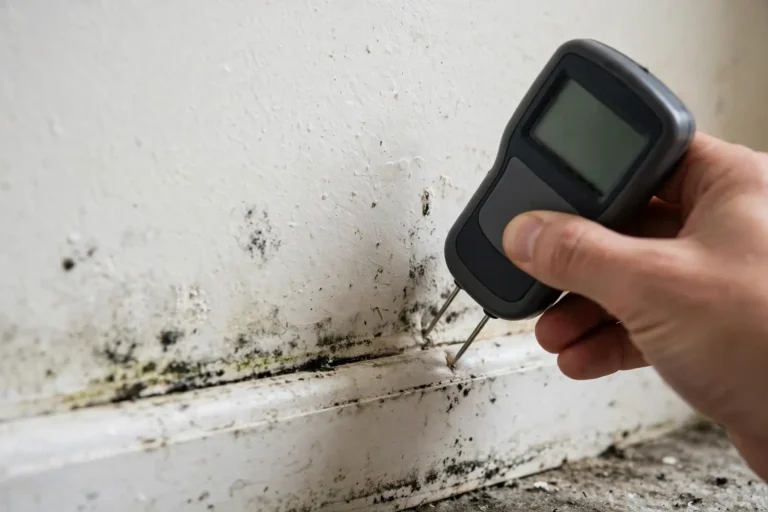
A fresh clog with clean surfaces is an HVAC maintenance job. Any AC technician clears lines and pans during routine service. The job turns into a mold problem when water sat long enough to grow. Ceiling stains, wall softness, and lingering odor mark that line.
Overflow water soaks drywall and insulation just like a plumbing leak. Our after water damage guide covers the drying timeline that follows. Call for a mold inspection when stains spread or smells survive the line clearing.
Mold in your home or business?
Talk to a remediation specialist now — fast response across Fort Lauderdale.
Clear the Line Before It Clears Your Ceiling
A clogged drain line is cheap to clear and expensive to ignore. To get started, request a mold inspection or call (855) 732-0108. Mention any ceiling stains or shutdowns, since those point to how long water sat. Mold Remediation Ft Lauderdale serves Fort Lauderdale and Broward County.
Mold Remediation Ft Lauderdale
(855) 732-0108
Frequently Asked Questions
How often should an AC drain line be cleaned in Florida?
Twice a year suits most Fort Lauderdale homes, before and during summer. Monthly vinegar at the access tee keeps growth down between cleanings. Homes with past clogs benefit from a spring service visit. The line clogs fastest during the months the AC runs daily.
Why does my AC keep shutting off?
A tripped float switch is the most common cause in clog cases. The switch cuts power when the drain pan fills with backed-up water. The AC restarts only after the pan drains or the line clears. Treat the shutdown as a warning, not a fault to bypass.
Can a clogged drain line cause mold?
Yes, because the backed-up water sits inches from the airstream. Mold grows in the pan, on the coil, and on nearby insulation. Overflow water then wets ceilings and walls below the unit. Clearing the line stops the source, but grown mold needs its own cleanup.
Where is my AC drain line outlet?
Most outlets sit outside, near the condenser unit, at ground level. The PVC pipe usually ends a few inches above the soil or a pad. It should drip steadily whenever the AC cools. No drip during a cooling cycle means the water goes somewhere else.
Does vinegar really keep the drain line clear?
Vinegar slows algae and slime growth between deeper cleanings. It will not dissolve a plug that already blocks the line. Vacuum suction handles the plug, and vinegar handles prevention afterward. Monthly use during summer is the rhythm that works here.
Who do I call for a clogged drain line, an AC tech or a mold company?
Call an AC technician for the clog, the pan, and the switch. Call a mold company when water damage or growth followed the clog. Many homes need both, in that order. Clearing first keeps new growth from starting during the cleanup.


One Comment