

Whether homeowners insurance covers mold in Fort Lauderdale depends on what caused the moisture, not on the mold itself. Most Florida policies pay for mold only after a sudden, accidental water loss, like a burst pipe. Some storm damage can qualify too. Many policies also cap that payment at a fixed dollar amount. The water’s cause and your policy limit decide the outcome.
This guide gives general information, not insurance, legal, or claims advice. Only your insurer can confirm what your policy covers, and wording differs from one company to the next.
Mold in your home or business?
Talk to a remediation specialist now — fast response across Fort Lauderdale.
Does Homeowners Insurance Cover Mold After a Storm or Pipe Burst?
Homeowners insurance often covers mold that grows from a covered, sudden water event. Examples include a burst supply line, a failed water heater, or a storm that opened the roof. The policy treats the mold as part of the water damage, so the water’s cause drives the decision.
Adjusters usually ask when the leak started, what caused it, and when drying began. A pipe dried within two days reads differently than a slow drip found months later. Wind-driven rain through a storm-opened roof is often treated differently from rain that seeps through worn roofing. Policy wording varies, so the fungi and water-damage sections of your policy matter most.
When Do Florida Insurers Deny a Mold Claim?
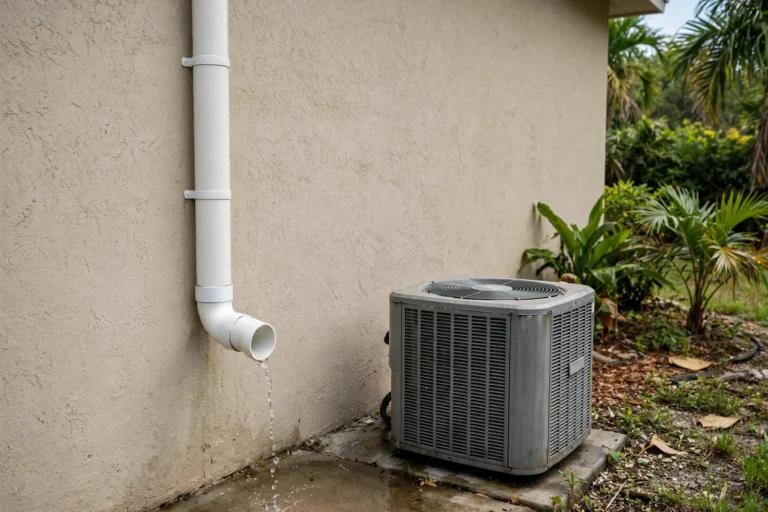
Florida insurers often deny mold claims when the moisture came from a long-term leak, constant humidity, or poor maintenance. Policies typically exclude damage that builds over weeks or months because it is not sudden or accidental. In Fort Lauderdale, a slow air conditioning drain leak or a seeping roof is a common example. Many owners assume storm-season mold is covered automatically because a storm passed through. Insurers still tie the decision to the water’s cause and the drying timeline.
Common reasons for denial include:
- Long-term leakage or seepage that went unrepaired
- Humidity or condensation with no sudden water event
- Flood or storm surge on a property without flood coverage
- Late reporting or slow drying after the loss
- Mold left over from earlier, unrepaired water damage
On jobs where mold follows a water loss, the claim usually turns on the timeline rather than the mold itself. For the drying timeline, see how long mold takes to grow after water damage. Insurers may expect owners to act on a similar timeline.
How Much Will a Florida Policy Pay for Mold?
Many Florida policies limit mold coverage to a fixed amount, commonly 1,000 to 10,000 dollars, though the figure varies by policy. The limit usually sits in a fungi, wet rot, or bacteria provision. It may cover testing and cleanup together. In a Fort Lauderdale home, a large water event can spread mold across several rooms before anyone sees it. That cap can run out before the work ends.
Storm claims add another cost. Florida policies often apply a separate hurricane deductible, commonly set as a percentage of the dwelling coverage, such as 2, 5, or 10 percent. On a home insured for 400,000 dollars, a 2 percent deductible equals 8,000 dollars. That amount can absorb a small mold claim, and the actual deductible depends on your policy. Ask your insurer which deductible applies and whether testing costs count against the mold limit.
Does Flood Insurance Cover Mold?
Standard homeowners policies exclude flood damage, so mold from rising water or storm surge usually falls outside that policy. Separate flood insurance, such as a National Flood Insurance Program policy, may cover mold tied directly to a covered flood, with conditions. Coverage often depends on whether the owner dried and cleaned the property promptly after the water receded.
Waterfront areas, including the Rio Vista neighborhood of Fort Lauderdale, can see high-tide and storm-surge flooding. Confirm with your agent whether your property carries flood coverage and what that policy says about mold.
How Much Does Mold Cleanup Cost Compared With Typical Coverage Limits?
Cleanup costs matter in a claim because the mold limit is fixed while the job size is not. A small contained spot may sit well under the mold limit. Mold across several rooms can pass that cap quickly. Attic or ductwork work adds cost many owners do not expect. Full Fort Lauderdale pricing ranges are on our homepage. A written estimate after an inspection gives the figure your insurer will work from, and prices may vary after inspection.
Mold in your home or business?
Talk to a remediation specialist now — fast response across Fort Lauderdale.
Does a Condo Owner’s Policy Cover Mold?
A condo owner’s policy and the association’s master policy usually divide the coverage. The split depends on where the water started and what the governing documents say. The master policy typically covers the building structure. A unit owner policy often covers interior finishes, belongings, and some assessment charges.
For how condo coverage splits between owner and association, see Mold in a Florida Condo: Who Pays, the Owner or the Association?. Stacked units and shared walls make the water source harder to trace.
What Should You Document Before Filing a Mold Insurance Claim?
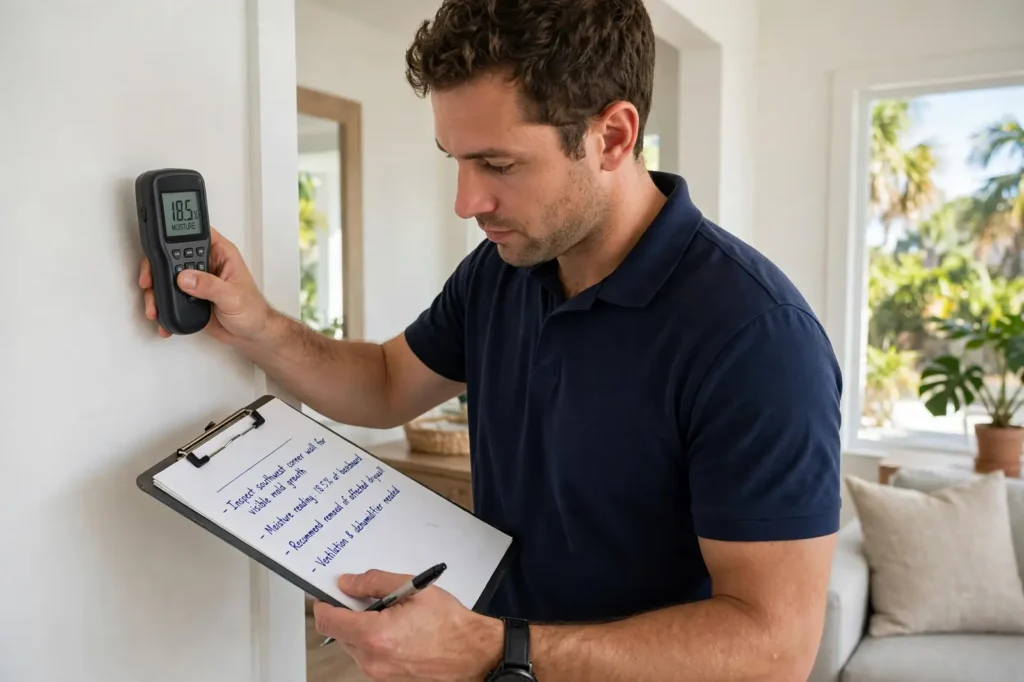
Document the water source, the date you found it, and the moisture readings before anyone removes materials. Insurers compare those facts against the policy. Photographs, a written scope of work, and receipts for drying and repairs form the paper trail an adjuster reviews. Humidity speeds mold growth in Fort Lauderdale, so a dated record helps when timing is questioned.
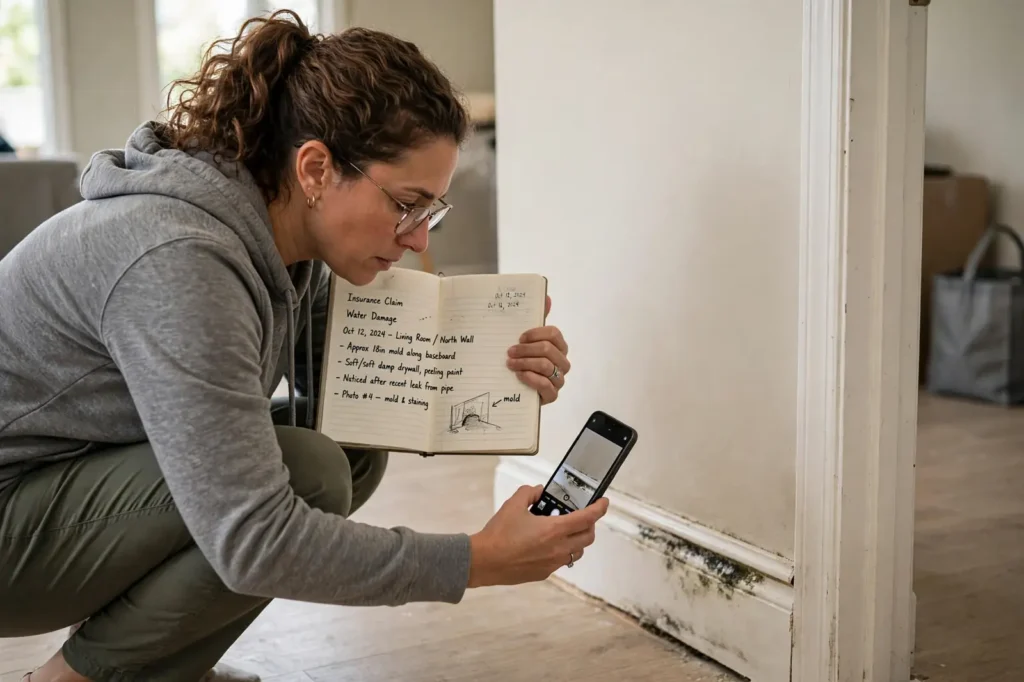
- Stop the water source if you can do so safely, and photograph it first.
- Report the loss to your insurer promptly, since policies set notice deadlines.
- Dry wet materials within the drying timeline, and keep every receipt.
- Photograph visible mold and damaged materials before any cleanup begins.
- Keep damaged materials until the adjuster has seen them, unless safety requires disposal.
- Request a written, itemized scope of work after a mold inspection that records moisture readings.
- Store invoices, reports, and emails together in one folder.
Which Industry Standards Apply to Mold Work After a Claim?
For the cleanup steps and standards that apply, see our mold remediation process.
Why Does Timing Matter for Mold Claims in Fort Lauderdale?
For the cleanup steps that apply, see our mold remediation process. Hurricane season runs from June through November, and heavy storms can create backlogs for adjusters and contractors. Early photos and an early report give your claim a clear record while the evidence is still visible.
Older homes, such as those in the Victoria Park neighborhood of Fort Lauderdale, can have aging plumbing and roofing. Those materials may raise long-term leakage questions during a claim, which makes a dated record even more useful.
Get a Written Scope of Work Before You File
A mold inspection records moisture readings, affected areas, and the likely water source. That record gives you and your insurer a clear starting point. To get started, request a mold inspection and written estimate or call (855) 732-0108. Describe what caused the water and when you found it. Mold Remediation Ft Lauderdale serves Fort Lauderdale and Broward County.
Mold Remediation Ft Lauderdale
(855) 732-0108
Mold in your home or business?
Talk to a remediation specialist now — fast response across Fort Lauderdale.
Frequently Asked Questions
Will my insurance pay for mold cleanup after a leak?
Insurance sometimes pays, but only under certain conditions. Coverage usually applies when mold follows a sudden, accidental water loss like a burst pipe, up to the policy’s mold limit. Mold from slow leaks or humidity is often excluded, so your insurer decides after reviewing the cause and timeline.
How long do I have to report mold damage in Florida?
Report it as soon as you find it. Florida law sets outer deadlines for property claims, and your policy may require much sooner notice. Waiting also lets mold spread, which can enlarge both the damage and the dispute.
Does insurance cover mold from air conditioning condensation or humidity?
Often not, because insurers treat constant humidity and slow condensation as maintenance issues rather than sudden accidents. A sudden failure, such as a ruptured condensate line, may be treated differently. Condensation is a frequent mold source in Fort Lauderdale homes, so ask your insurer how it classifies the cause.
What if my mold claim is denied?
Read the denial letter closely, because it must name the policy reason for the decision. Compare that reason against your photos, your timeline, and the written scope of work. If the record shows a sudden water loss, ask the insurer to re-review the claim with that documentation. A public adjuster or an attorney can also review a disputed denial.
What does a legitimate mold cleanup include that an insurer may want documented?
Insurers usually want the paperwork more than the process itself. A written scope of work, moisture readings, and a clearance test result show what was done and that it passed. The full mold remediation process behind those documents is explained on our process page.
Should I clean the mold myself before filing a claim?
Photograph the damage first, because cleanup can erase the evidence an adjuster needs. EPA guidance treats areas under about 10 square feet as manageable for many homeowners. Larger or recurring growth usually calls for professional help. Scrubbing a stain rarely fixes the moisture source behind the wall, which is why mold so often returns within weeks.


One Comment