Mold behind walls grows out of sight while the room looks freshly painted. It still announces itself through smell, stains, and surfaces that feel wrong. Most hidden growth traces back to a leak that wet the cavity weeks earlier. Finding it early keeps a small opening from becoming a full tear-out.
Here is a scenario, not a real client story, but remediators open walls like this monthly. A family in the Riverland neighborhood of Fort Lauderdale paints their living room twice in one year. The same faint stain bleeds through both coats within weeks. A meter check shows the wall wet behind the paint, fed by a pinhole pipe leak.
Mold in your home or business?
Talk to a remediation specialist now — fast response across Fort Lauderdale.
What Are the Signs of Mold Behind Walls?
Hidden mold rarely stays completely silent. Watch for this cluster of clues together:
- A musty smell with no visible mold anywhere. Odor escaping the wall is often the first and only early sign.
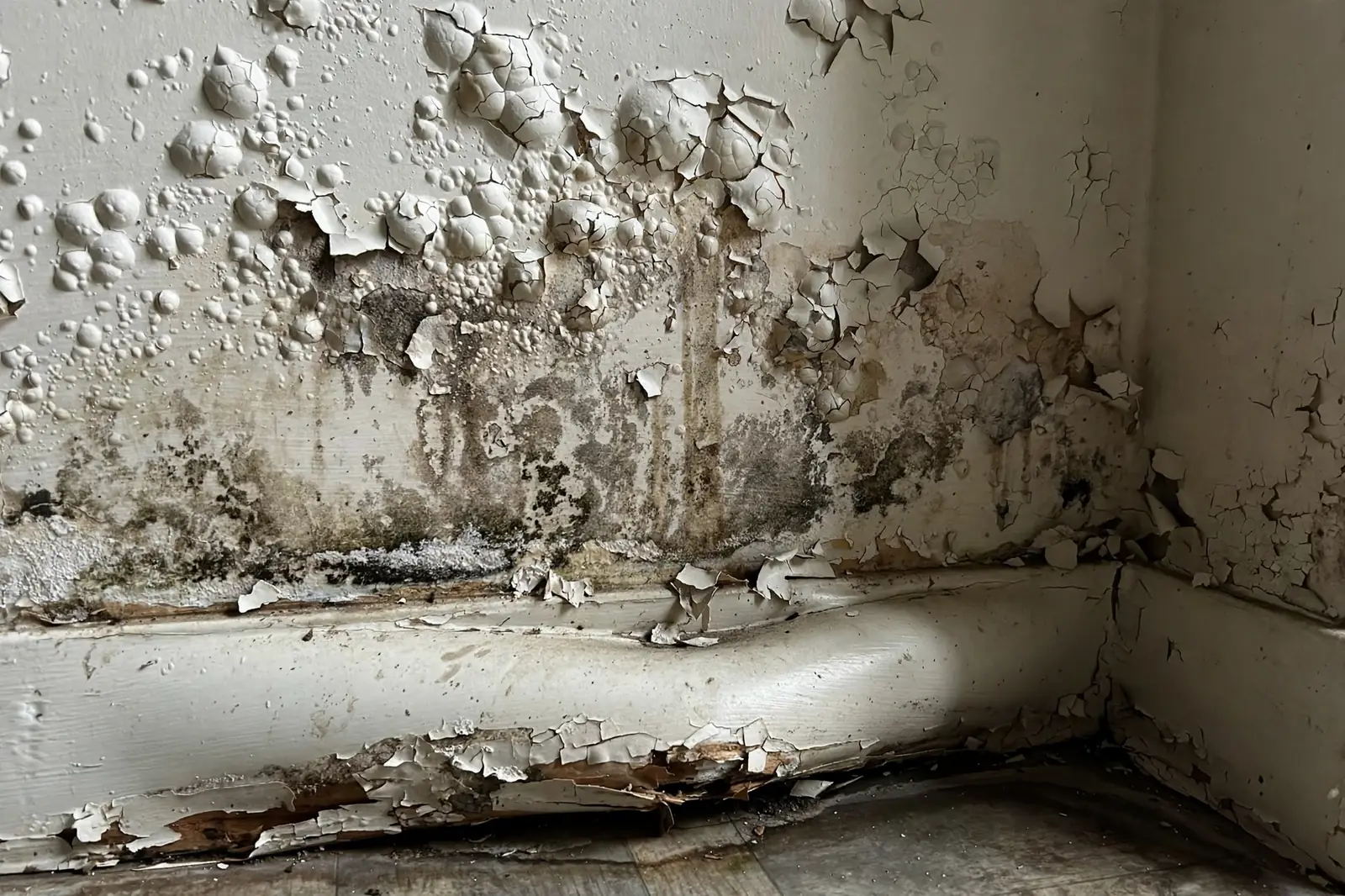
- Paint that bubbles, peels, or shows a returning stain. Paint fails where moisture pushes from behind the surface.
- Baseboards that gap, swell, or pull away from the wall. Wet drywall and trim change shape as they absorb water.
- Flooring that warps, cups, or feels soft near a wall. Water travels down and out along the floor line.
- A wall that feels cool or damp in one repeat spot. Cavities hold moisture long after the room air dries.
Where Does the Water Behind Walls Come From?
Plumbing inside the wall is the usual source. Pinhole leaks in copper lines spray a fine mist for months. Supply lines to sinks, toilets, and ice makers loosen slowly. Each source wets the same cavity day after day.
Water also arrives from outside and above. Roof leaks run down inside walls before staining ceilings. Window frames with failed seals drink wind-driven rain here. Our after water damage guide covers the leak timelines behind most cases.
How Do Professionals Find Mold Behind Walls?
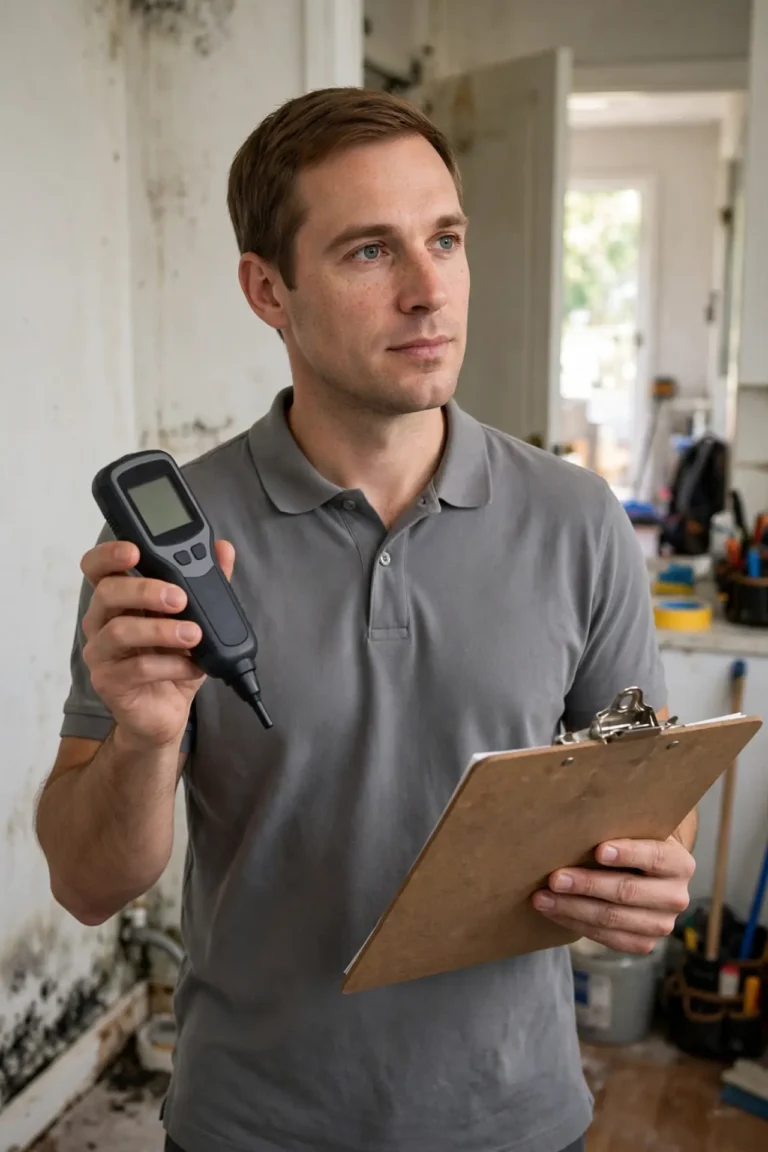
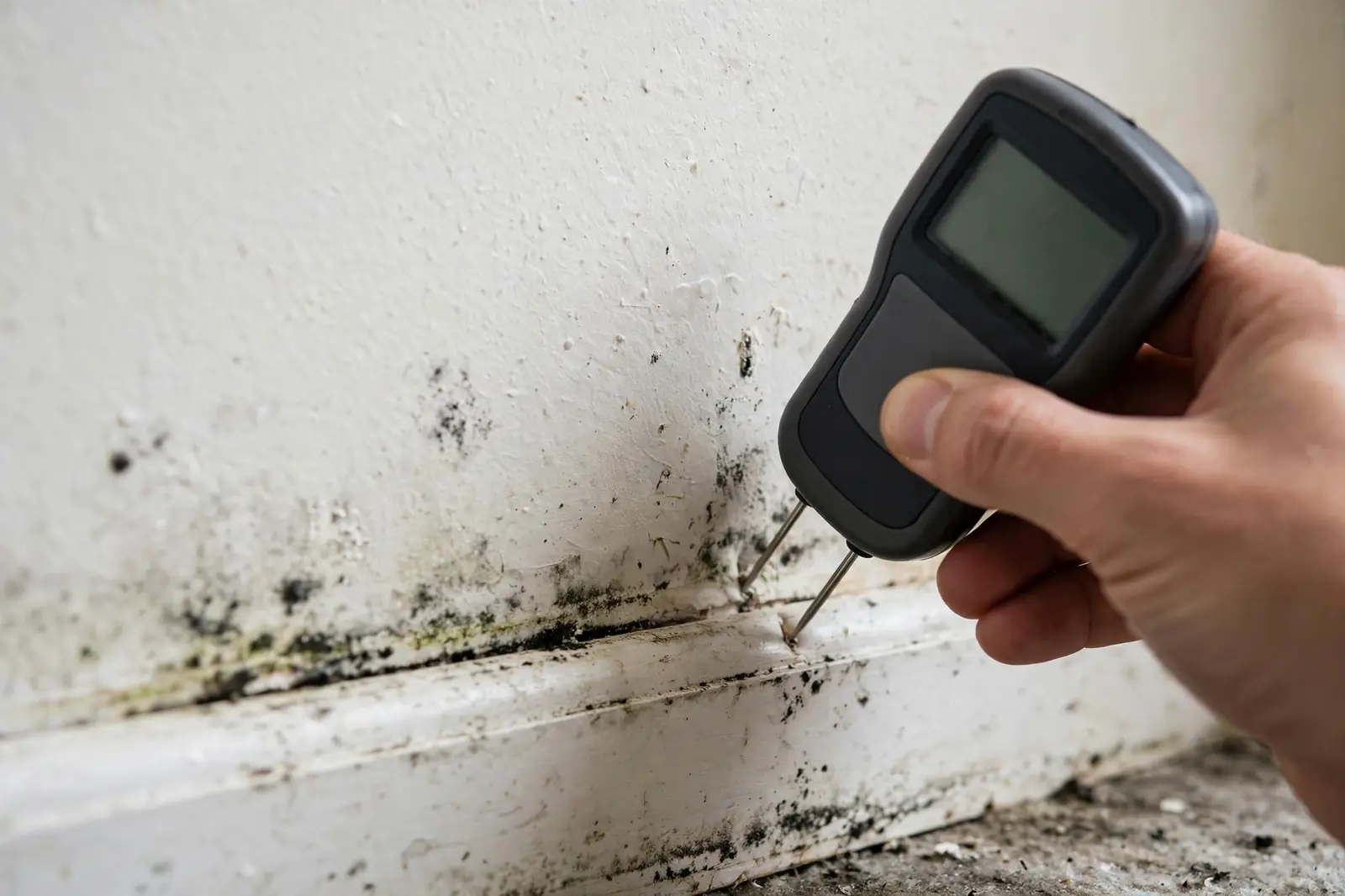
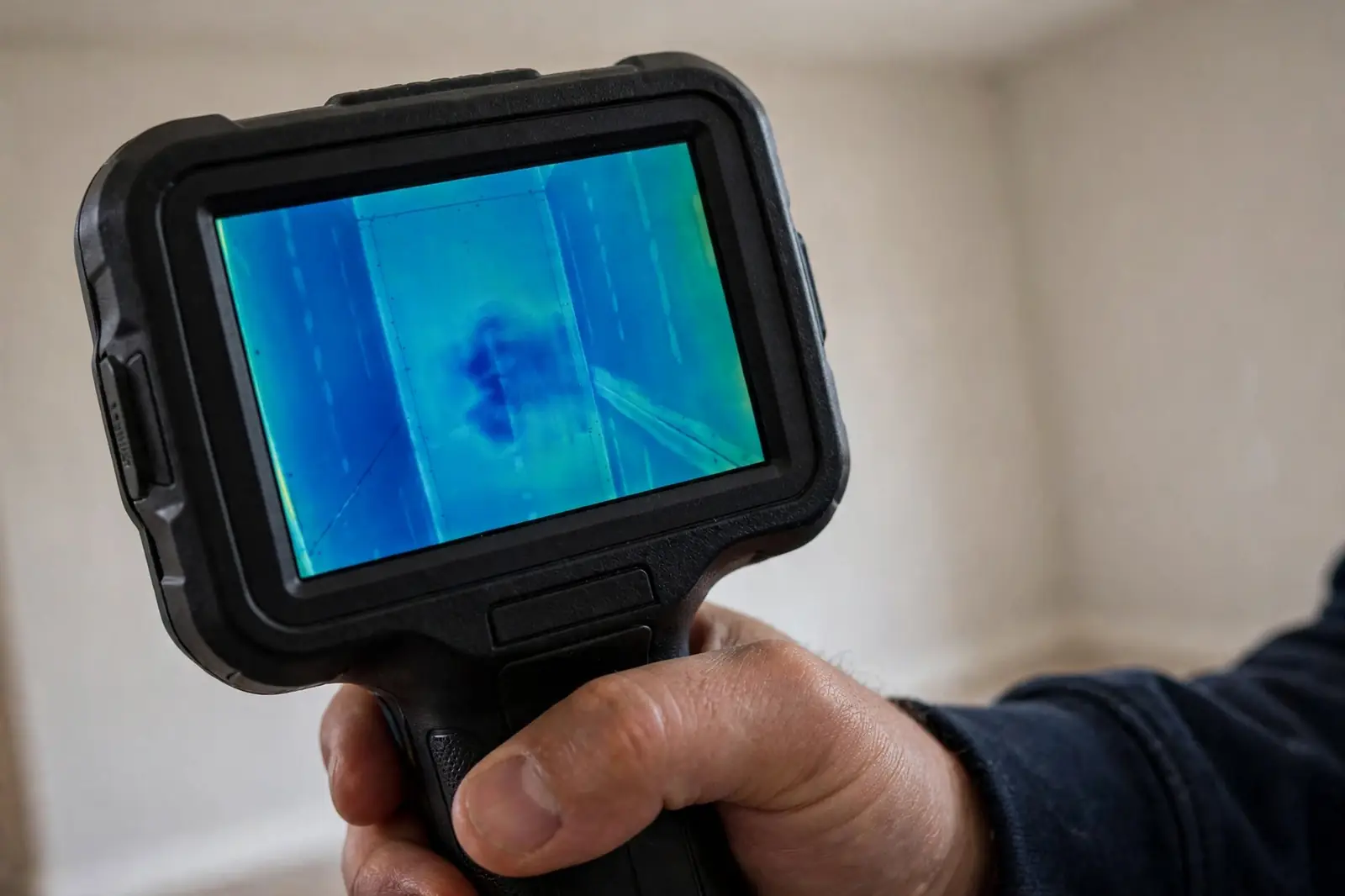
Pin moisture meters read damp drywall without opening anything. Pinless meters scan wide areas fast and flag the wet zones. Thermal cameras show cool patches where evaporation betrays hidden water. Together they draw a moisture map before any cutting starts.
Air and cavity sampling confirm what the meters suggest. A small hole behind a baseboard admits a cavity sample tube. DIY kits cannot sample inside a wall cavity at all. What home kits can and cannot prove is covered on our mold test kits page.
When Is Opening a Wall Worth It?
Open the wall when meters, smell, and history all point the same way. Confirmed moisture plus a known leak makes the answer simple. A small inspection opening behind a baseboard limits the damage. Guessing without readings leads to holes in the wrong rooms.
Skip the opening when every reading comes back dry. Odor alone sometimes traces to a drain, a vent, or soft furnishings. A dry map saves your wall and redirects the search. Professionals would rather re-test than demolish on a hunch.
Mold in your home or business?
Talk to a remediation specialist now — fast response across Fort Lauderdale.
Trust the Signs Before the Wall Tells You
Hidden mold rewards the homeowner who checks early and measures first. To get started, request a mold inspection or call (855) 732-0108. Mention where the smell or stain keeps returning, since patterns locate cavities. Mold Remediation Ft Lauderdale serves Fort Lauderdale and Broward County.
Mold Remediation Ft Lauderdale
(855) 732-0108
Frequently Asked Questions
Can you smell mold behind walls before you see it?
Yes, smell is usually the earliest warning a cavity gives. The odor leaks out through outlets, baseboard gaps, and trim joints. It strengthens when the AC runs or humidity climbs indoors. Trust a returning smell even when walls look clean.
Does a moisture meter really find hidden mold?
Meters find the moisture that hidden mold needs to grow. They map wet zones without opening the wall first. Growth itself is confirmed by cavity sampling or a small opening. Readings plus smell plus history make a strong combined case.
Will mold behind a wall dry out on its own?
Rarely, since the cavity traps humid air against wet material. The leak source keeps rewetting the same spot anyway. Drying needs the source fixed and air moving into the cavity. Sealed and ignored, it keeps growing in the dark.
How much wall has to come out for hidden mold?
Only the wet, grown section needs opening in most cases. Moisture mapping keeps the opening tight around the damage. Dry, clean drywall beside the zone usually stays in place. Clearance checks confirm the edges before closing up.
Can thermal imaging see mold itself?
No, cameras read surface temperature, not growth. Cool patches reveal evaporation, which points at hidden moisture zones. Inspectors then confirm those spots with meters and sampling. The camera speeds the search, but it never makes the diagnosis alone.
Is mold behind walls dangerous to leave?
Leaving it means the colony keeps growing while materials weaken. Spores escape into rooms through the same gaps the smell uses. Health effects vary by person, so doctors judge individual symptoms. The building case for removal stands on its own.